Revolutionizing Learning: The Role of Virtual Reality Tools in Training and Education
Introduction to Virtual Reality in Education
Virtual Reality (VR) is an innovative technology that simulates a three-dimensional environment, allowing users to interact with digital elements in a seemingly real-world context. In recent years, the significance of VR in education has escalated, as it provides unique opportunities for immersive learning experiences. By employing VR tools, educators can transport students to diverse settings, from historical sites to remote ecosystems, making abstract concepts tangible and relatable.
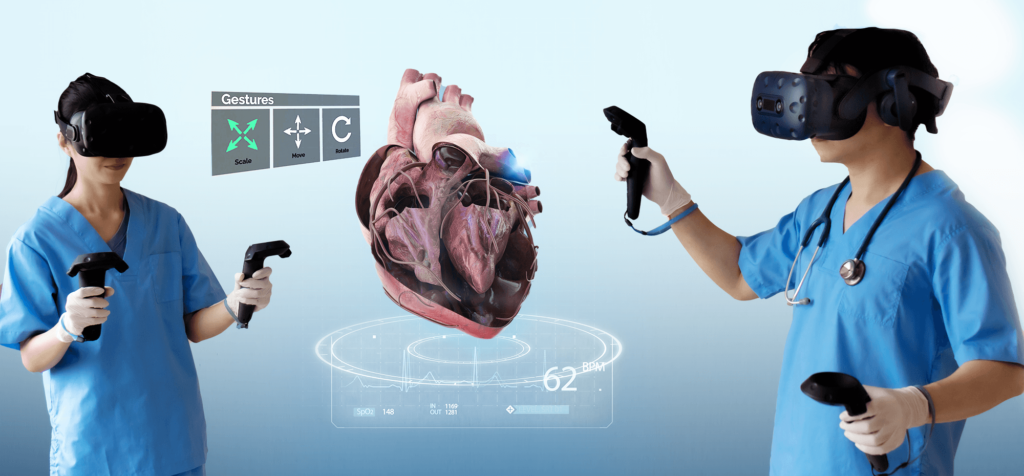
The basic principles of VR revolve around the creation of a digitally constructed environment that engages the user through sight and sound, often supplemented by touch through haptic feedback devices. This technology allows learners to perform tasks, explore environments, and experience situations in a controlled setting, enhancing their understanding and retention of complex information. For instance, medical students can practice surgical procedures in a simulated operating room, while geography students can conduct virtual field trips to various parts of the world.
Several educational institutions have begun to recognize the potential of incorporating VR into their curricula. With the decline in traditional learning engagement, many educators are increasingly turning to VR tools to create more stimulating and interactive lessons. Schools, colleges, and universities are implementing VR in subjects ranging from science and technology to history and art, thereby elevating student participation and motivation. Beyond enhancing engagement, VR has been associated with improved learning outcomes as well, as immersive experiences cater to multiple learning styles, allowing students to learn at their own pace.
The growing interest in VR technology underscores its importance as not merely a fleeting educational trend but as a transformative tool that has the potential to redefine learning methodologies. As education continues to evolve with technological advancements, the integration of VR tools may pave the way for a more effective and engaging learning experience.
Key Benefits of Using Virtual Reality Tools for Training
Virtual Reality (VR) tools are increasingly becoming an integral part of training programs across various disciplines, revolutionizing the way individuals acquire skills and knowledge. One significant advantage of VR is the immersive learning experience it provides. Unlike traditional training methods, VR enables learners to engage in highly interactive environments that mimic real-world scenarios. This immersion not only captures attention but also enhances understanding, as participants can visualize and interact with complex concepts in a tangible way.
In addition to offering immersive experiences, VR has shown to significantly increase knowledge retention. Studies indicate that learners who undergo training in a VR setting tend to retain information better and recall it more easily than those who participate in conventional learning methods. The combination of visual, auditory, and kinesthetic stimulation contributes to a deeper cognitive engagement, facilitating long-term memory formation.
Another critical benefit of VR tools is the ability to safely simulate real-world scenarios. This is particularly advantageous in fields such as healthcare, aviation, and engineering where mistakes can have severe consequences. With VR simulations, trainees can practice their skills in a risk-free environment, allowing them to learn from their errors without any real-world repercussions. This safety net encourages experimentation and fosters a more profound understanding of the material.
Furthermore, VR accommodates diverse learning styles, catering to visual, auditory, and kinesthetic learners alike. It allows instructors to present information in various formats and engage participants through multiple channels. With VR, complex concepts become more accessible, enabling learners to grasp difficult topics easily.
Lastly, VR facilitates remote training opportunities. By breaking geographical barriers, organizations can provide training to employees across different locations, leading to cost savings and increased accessibility. This flexibility ensures that more individuals can benefit from high-quality training experiences, regardless of their location.
Popular VR Tools and Platforms for Educational Purposes
As the landscape of education and training continues to evolve, virtual reality (VR) has emerged as a transformative force, offering immersive experiences that enhance learning outcomes. Several VR tools and platforms have gained popularity in educational settings, catering to a variety of disciplines. One notable example is zSpace, which combines VR with augmented reality (AR) to create interactive learning experiences, primarily in STEM education. Its hands-on approach allows students to engage with 3D models, fostering a deeper understanding of complex concepts.
Another significant platform is Google Expeditions, which enables educators to take students on virtual field trips around the globe. This tool facilitates experiential learning, allowing users to explore diverse environments such as historical sites or natural wonders without leaving the classroom. Moreover, Google Expeditions can be particularly effective in language learning, as it immerses students in different cultures and contexts.
Engage is another robust VR platform designed specifically for educational and training environments. It offers immersive environments where educators can create, share, and participate in virtual lessons. Engage supports a range of activities from virtual lectures to collaborative projects, accommodating numerous users simultaneously and thereby fostering team-based learning.
In the healthcare sector, Osso VR stands out as a specialized training tool for medical professionals. This platform allows surgeons to practice intricate procedures in a realistic, risk-free setting, honing their skills through repetition and instant feedback. By incorporating gamification elements, Osso VR ensures that learning remains engaging and challenging.
Additionally, platforms like ClassVR provide a comprehensive suite of educational experiences, offering teachers the ability to integrate VR into their curriculum seamlessly. With a wide array of resources and tools at their disposal, educators can deliver captivating lessons across various subjects, enhancing student engagement and retention.
Challenges and Future of Virtual Reality in Education
The integration of virtual reality (VR) tools within educational settings presents unique challenges that must be addressed to facilitate widespread adoption. One significant obstacle is the high cost associated with deploying VR technologies in schools and institutions. This includes not only the hardware and software but also ongoing maintenance and updates, which can strain budgets, particularly in underfunded educational systems. Moreover, the need for substantial infrastructure, such as robust internet connectivity and specialized equipment, adds another layer of complexity that can hinder implementation.
Technological limitations further complicate the potential for VR in education. As the field is constantly evolving, many current VR applications may not fully utilize the most advanced capabilities available. Compatibility issues between various devices and platforms can also impede the seamless integration of VR tools into existing curriculum structures. Additionally, educators often face a steep learning curve when adapting to this technology, which may lead to initial reluctance in its adoption.
Another critical challenge is the necessity for appropriate teacher training. For VR technology to be effectively utilized in pedagogical strategies, educators must be adequately prepared to design and implement VR-based lessons. Without comprehensive training programs, teachers may lack the confidence or knowledge required to proficiently incorporate these tools into their teaching methodologies.
However, the future of virtual reality in education is promising. Ongoing advancements in technology are likely to lower costs over time, making VR more accessible to various educational institutions. The evolution of pedagogical approaches also emphasizes experiential learning, aligning well with VR’s immersive capabilities. Furthermore, the increased investment in educational technologies from both public and private sectors indicates a growing recognition of VR’s potential. Considering these factors, the trajectory of VR as a fundamental tool in training and education is poised for a significant transformation.